The Iconic Pose of Nataraja in Bharatanatyam: Symbolism and Significance
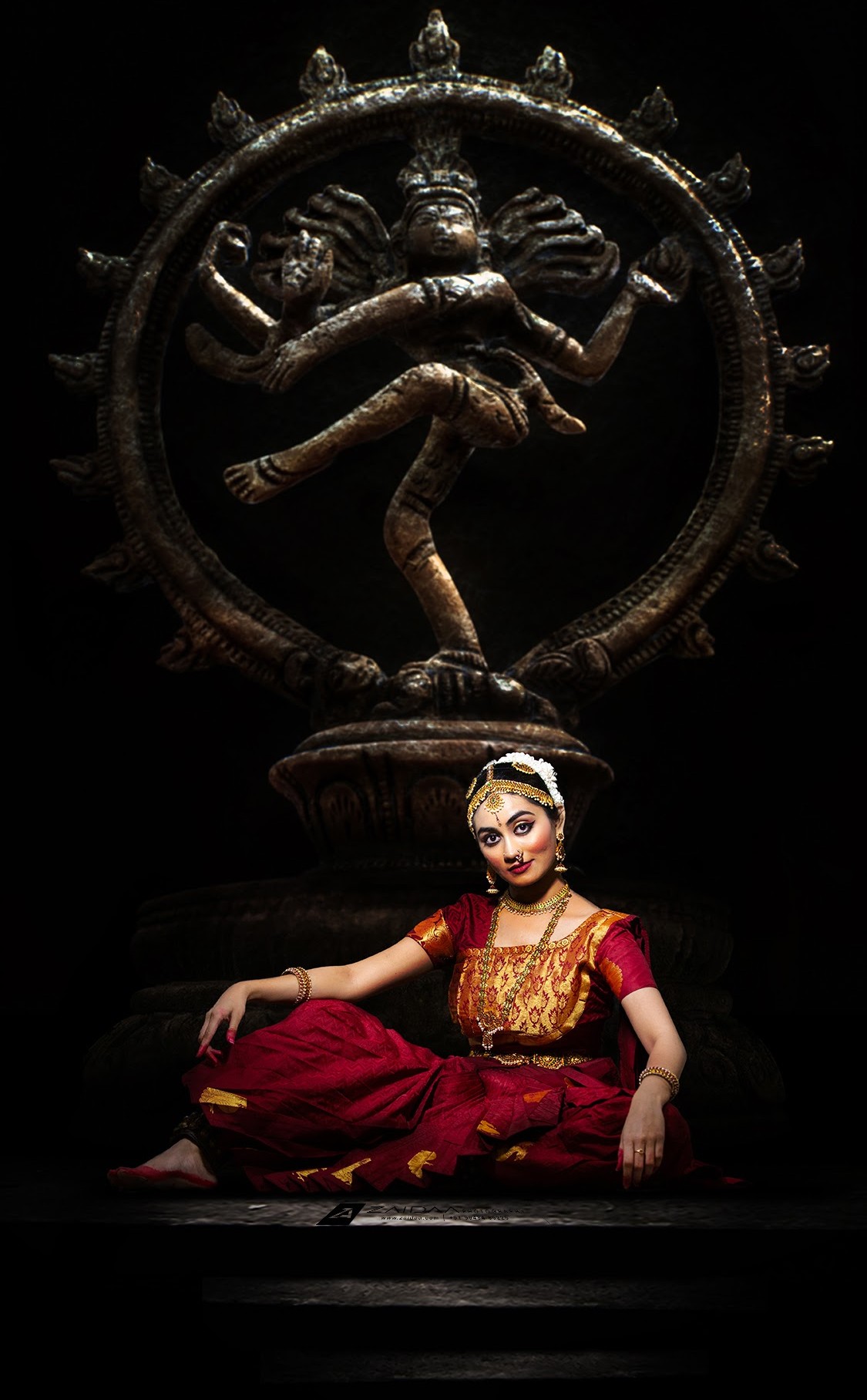
The Iconic Pose of Nataraja in Bharatanatyam: Symbolism and Significance
Bharatanatyam, one of India’s oldest classical dance forms, is deeply rooted in spirituality, storytelling, and layered symbolism. Among its most revered icons is Nataraja-Lord Shiva as the cosmic dancer. The Nataraja pose, rich in meaning and visual power, transcends physical movement to express profound philosophical ideas of creation, preservation, destruction, concealment, and grace.
For dancers, musicians, scholars, and spiritual seekers, understanding the Nataraja pose adds depth to both performance and perception. This article explores the origin, symbolism, structure, and enduring significance of the Nataraja pose in Bharatanatyam.
What Is the Nataraja Pose?
In Bharatanatyam, the Nataraja pose represents Lord Shiva performing the Ananda Tandava, the dance of bliss. This cosmic dance symbolizes the dynamic rhythm of the universe, where creation and dissolution occur in an eternal cycle.
The pose is one of the most recognized images in Indian art, temple sculpture, and classical dance, embodying Shiva as the supreme source of cosmic energy and consciousness.
The Origin of Nataraja in Hindu Mythology
The origins of Nataraja are deeply embedded in Hindu philosophical and spiritual traditions. Ancient texts describe Shiva’s cosmic dance as the force through which the universe is created, sustained, and transformed.
Saint Thirumoolar, in Thirumanthiram, explains that understanding Shiva’s dance is understanding the nature of existence itself. According to traditional interpretations, Shiva performs the five cosmic acts (Panchakrutya):
Creation (Srishti)
Preservation (Sthiti)
Destruction (Samhara)
Concealment (Tirobhava)
Grace (Anugraha)
The form of Ananda Nataraja represents these five acts while simultaneously transcending them, pointing toward Chidambaram-the space of pure consciousness (Chidakasam).
Swami Vipulananda of Ramakrishna Math described Nataraja as the highest symbolic form of divinity, representing both cosmic motion and enlightened stillness.
Symbolism Embedded in the Nataraja Pose
Every element of the Nataraja icon carries layered meaning:
Creation: The rhythmic movement of the dance initiates life and growth.
Destruction: The same movement dissolves forms, enabling renewal.
Preservation: Balance within motion sustains cosmic order.
The Nataraja pose merges physical form with metaphysical truth, making it a powerful teaching tool in Bharatanatyam.
Nataraja and Modern Science
In 2004, a two-meter-tall statue of Lord Nataraja was installed at CERN, the European Organization for Nuclear Research in Geneva. This gesture acknowledged the striking parallel between Shiva’s cosmic dance and the movement of subatomic particles.
Physicist Fritjof Capra, in The Tao of Physics, famously drew connections between modern physics and Eastern philosophy, describing Shiva’s dance as a metaphor for the continuous creation and destruction observed at the subatomic level.
“Every subatomic particle not only performs an energy dance but is an energy dance… a pulsating process of creation and destruction without end.”
This intersection of art, spirituality, and science highlights the timeless relevance of Nataraja’s symbolism.
The Physical Structure of the Nataraja Pose
The Nataraja pose has a precise and intentional structure:
One leg lifted in a dynamic dance posture
One leg grounded, often placed upon a dwarf figure
Arms positioned in symbolic Mudras
The body balanced between movement and stillness
For Bharatanatyam dancers, mastering this pose requires years of disciplined practice, strength, flexibility, and refined control.
The Circle of Flames (Prabhamandala)
Shiva dances within a ring of flames known as the Prabhamandala. This fiery halo represents:
The endless cycle of time
The energy that fuels the universe
The impermanence of all forms
In Bharatanatyam, dancers internalize this symbolism by expressing continuous energy, rhythm, and flow through their movements.
The Raised Leg and Dance Posture
The raised leg in the Nataraja pose signifies liberation and transcendence, while the grounded leg represents Shiva’s connection to the material world.
This duality-movement and stillness, transcendence and grounding-is central to Bharatanatyam’s philosophy and technique.
Apasmara: The Dwarf of Ignorance
Under Nataraja’s foot lies Apasmara, a dwarf symbolizing ignorance and ego. By subduing Apasmara, Shiva demonstrates the triumph of knowledge over illusion.
In Bharatanatyam, this symbolism is conveyed through controlled strength, grace, and purposeful expression.
Hand Gestures (Mudras) and Their Meanings
Nataraja’s hands communicate divine messages:
Abhaya Mudra: Assurance, protection, and fearlessness
Damaru (Drum): The primordial sound that initiates creation
Gaja Hasta: Symbolic gestures guiding the devotee toward liberation
Through Mudras, Bharatanatyam dancers bridge mythology and lived experience.
Finding Balance in Dance and Life
The Nataraja pose teaches balance-not only in physical movement but in life itself. Bharatanatyam encourages dancers to remain grounded, adaptable, and centered amid constant change.
This philosophy transforms dance into a meditative and transformative practice.
Conclusion: Embracing the Spirit of Nataraja
The Nataraja pose is a profound synthesis of art, mythology, and philosophy. In Bharatanatyam, it serves as a reminder that dance is not merely performance, but a pathway to understanding existence itself.
By embodying Nataraja, dancers connect with an ancient lineage that continues to inspire, elevate, and illuminate the human spirit.