Angashuddham in Bharatanatyam: The Foundation of Classical Precision
Explore More
In Bharatanatyam, technique is not merely about movement - it is about Angashuddham (purity and correctness of bodily alignment). Without Angashuddham, even the most complex choreography lacks classical integrity.
For serious students of Bharatanatyam - especially those training internationally - understanding Angashuddham is essential to preserving the grammar of this ancient art.
What Is Angashuddham?
The word Anga means "limb" or "major body division," and Shuddham means "purity" or "clarity." Together, Angashuddham refers to precision in posture, line, geometry, balance, and energy flow.
According to the Natya Shastra (ancient Sanskrit treatise on performing arts), the body is divided into:
- Anga (major limbs - head, hands, chest, sides, waist, feet)
- Upanga (minor limbs - eyes, eyebrows, cheeks, nose)
- Pratyanga (subsidiary limbs - shoulders, arms, thighs)
True Angashuddham requires harmony across all three.
Why Angashuddham Is Central to Bharatanatyam Technique
Bharatanatyam is a codified classical form governed by geometry and rhythm. Every Adavu (basic movement unit) must reflect structural clarity.
Araimandi (Half-Sitting Posture)
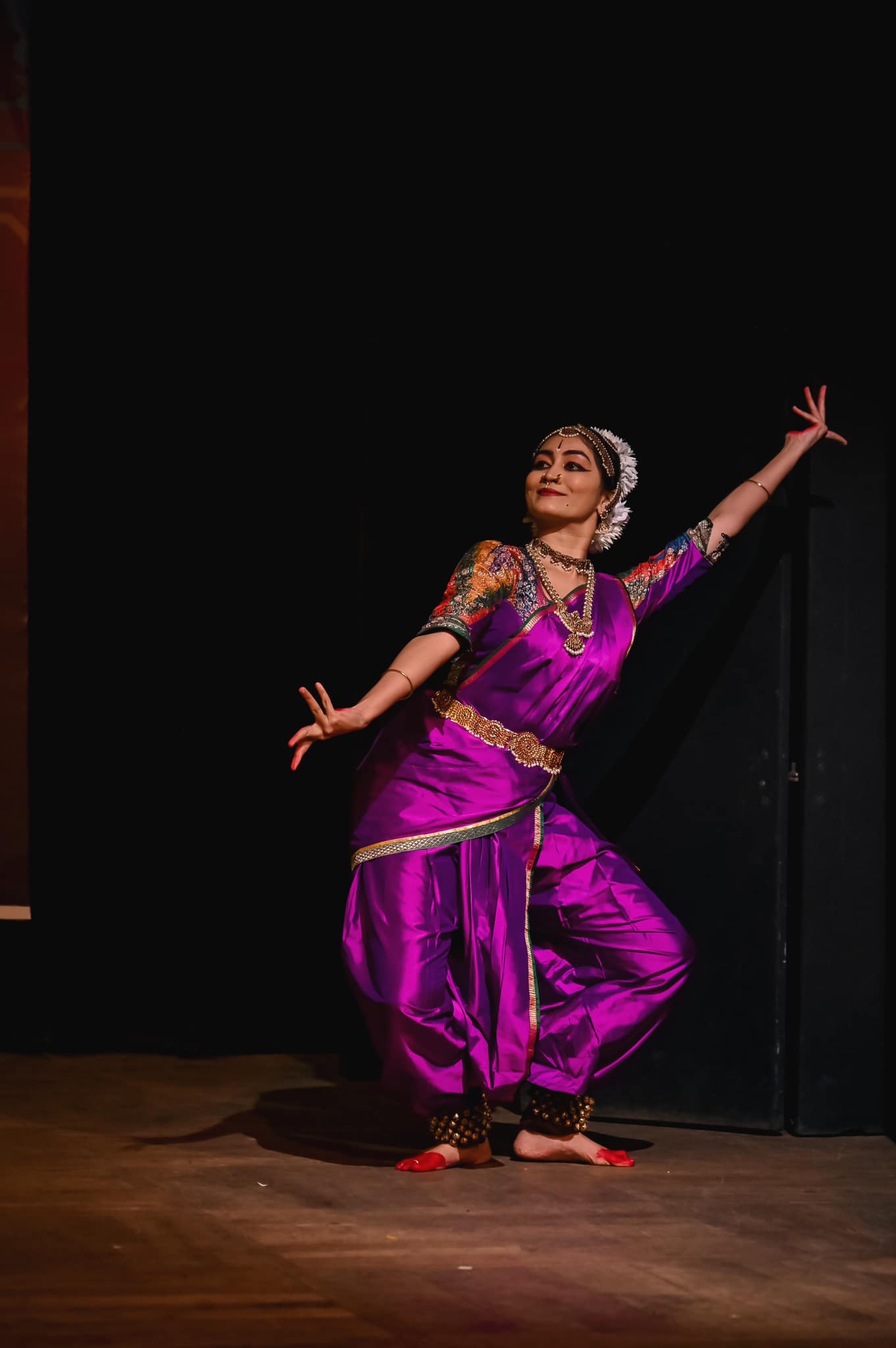
The foundation of Angashuddham begins with Araimandi (demi-plié posture). Knees must open outward, spine erect, pelvis neutral, chest lifted without rigidity.
Without a stable Araimandi, rhythm weakens and balance collapses.
Hasta Alignment
Hastas (hand gestures) must extend from the shoulder with controlled energy. Elbows neither droop nor overextend. Fingers remain alive, not decorative.
Drishti (Focused Gaze)
Eye direction - Drishti - completes movement. Incomplete gaze disrupts line and intention.
Angashuddham in Nritta and Abhinaya
Nritta (Pure Dance Technique)
In Nritta (abstract rhythmic dance), Angashuddham ensures clarity of lines, clean footwork, and rhythmic authority within Tala (metric cycle).
Even advanced sequences in a Varnam (central elaborate composition) rely on disciplined Angashuddham.
Abhinaya (Expressive Communication)
In Abhinaya (expressive storytelling), physical precision supports emotional authenticity. If the torso collapses or alignment breaks, Bhava (emotional state) loses impact.
Thus, technique and expression are inseparable.
Common Misunderstandings About Angashuddham
- It is not stiffness - it is controlled dynamism.
- It is not rigidity - it is energized alignment.
- It is not aesthetic imitation - it is internalized structure.
True Angashuddham emerges from years of disciplined Abhyasa (consistent practice).
Developing Angashuddham in Online Bharatanatyam Training
For international students learning Bharatanatyam online, Angashuddham requires:
- Close teacher correction
- Slow repetition of Adavus
- Understanding body mechanics
- Awareness of symmetry and geometry
When online training follows classical pedagogy, Angashuddham can be cultivated with equal seriousness as in-person instruction.
Angashuddham and the Global Preservation of Bharatanatyam
As Bharatanatyam expands globally, Angashuddham becomes even more crucial. It safeguards authenticity across cultures and continents.
Technique preserves lineage. Precision preserves tradition.
Frequently Asked Questions
What does Angashuddham mean in Bharatanatyam?
Angashuddham means purity and correctness of bodily alignment in Bharatanatyam technique.
Why is Araimandi important for Angashuddham?
Araimandi provides structural stability, balance, and geometric clarity necessary for classical precision.
Can Angashuddham be developed through online classes?
Yes. With structured correction, disciplined repetition, and teacher guidance, Angashuddham can be systematically cultivated online.
Ready to Begin Your Dance Journey?
Join Samridhi Dance Online and learn Bharatanatyam from the comfort of your home.